Mushroom Cross Stitch Patterns: 4 Ideas and How to Check a Chart
Last updated: October 7, 2026
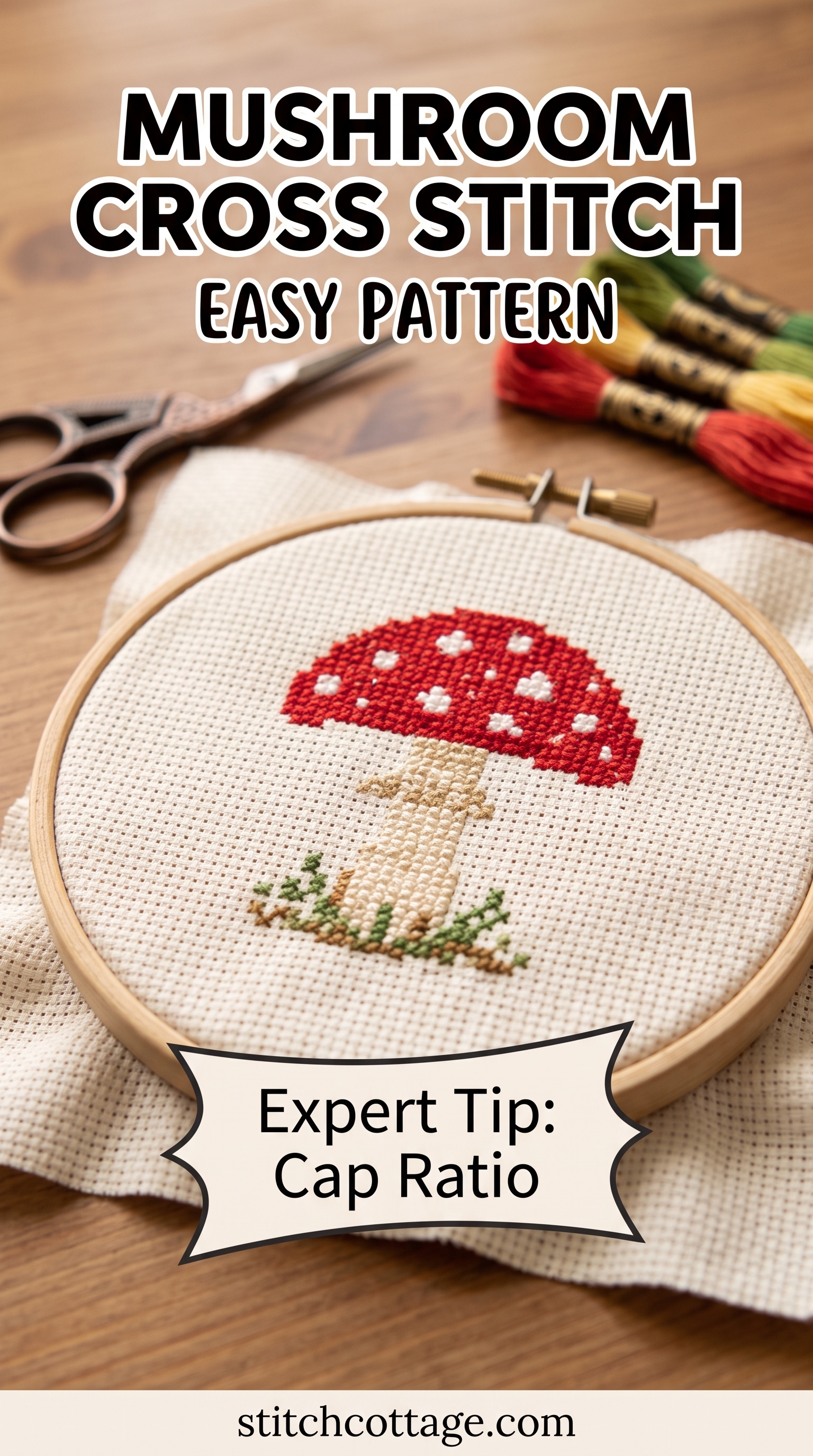
A mushroom reads as a mushroom in cross stitch because of one ratio: the cap is wider than the stem is tall. Get that ratio right and three colours will carry the whole motif for you. Miss it, and what comes off your hoop is a lamp with a stalk.
That is the part free charts never tell you. You get a photo of a finished hoop and a PDF, and you count squares on a phone screen to find out whether the thing even fits your fabric.
Quick answer: pick your cap shape first, dome or flat. Then count the chart’s width in stitches and divide by 14 to get your finished size on 14 ct aida. A chart 68 stitches wide finishes just under 5 inches. Three colours are enough for any of the four mushroom cross stitch patterns below. Check the symbol key and the edges of the PDF before your first stitch, not after.
I stitch these from charts that state their count on the file, which is why I buy rather than hunt. You can skip the hunting too: mushroom charts with a stated stitch count and licence are one search away, the same rule behind our sunshine cross stitch patterns.


What makes a mushroom read as a mushroom
Four marks decide it. All four are placement rather than skill, so you can get them right on your first try.
- Cap width. Wider than the stem is tall. A narrow cap on a long stem is a tree, or a lamp.
- Cap depth. Half the cap width for a dome, a third for a flat toadstool. Below a third it stops looking like a cap.
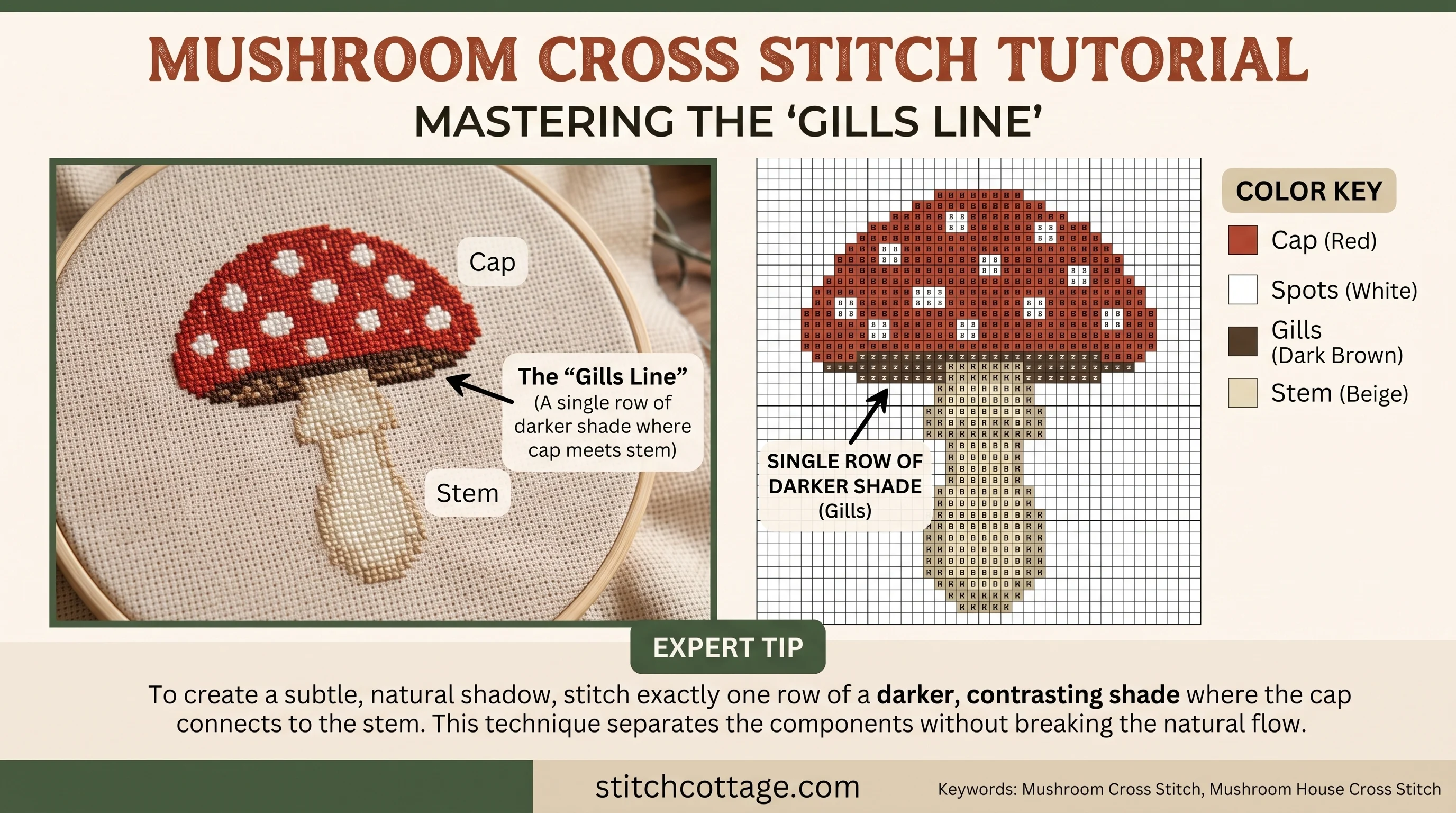
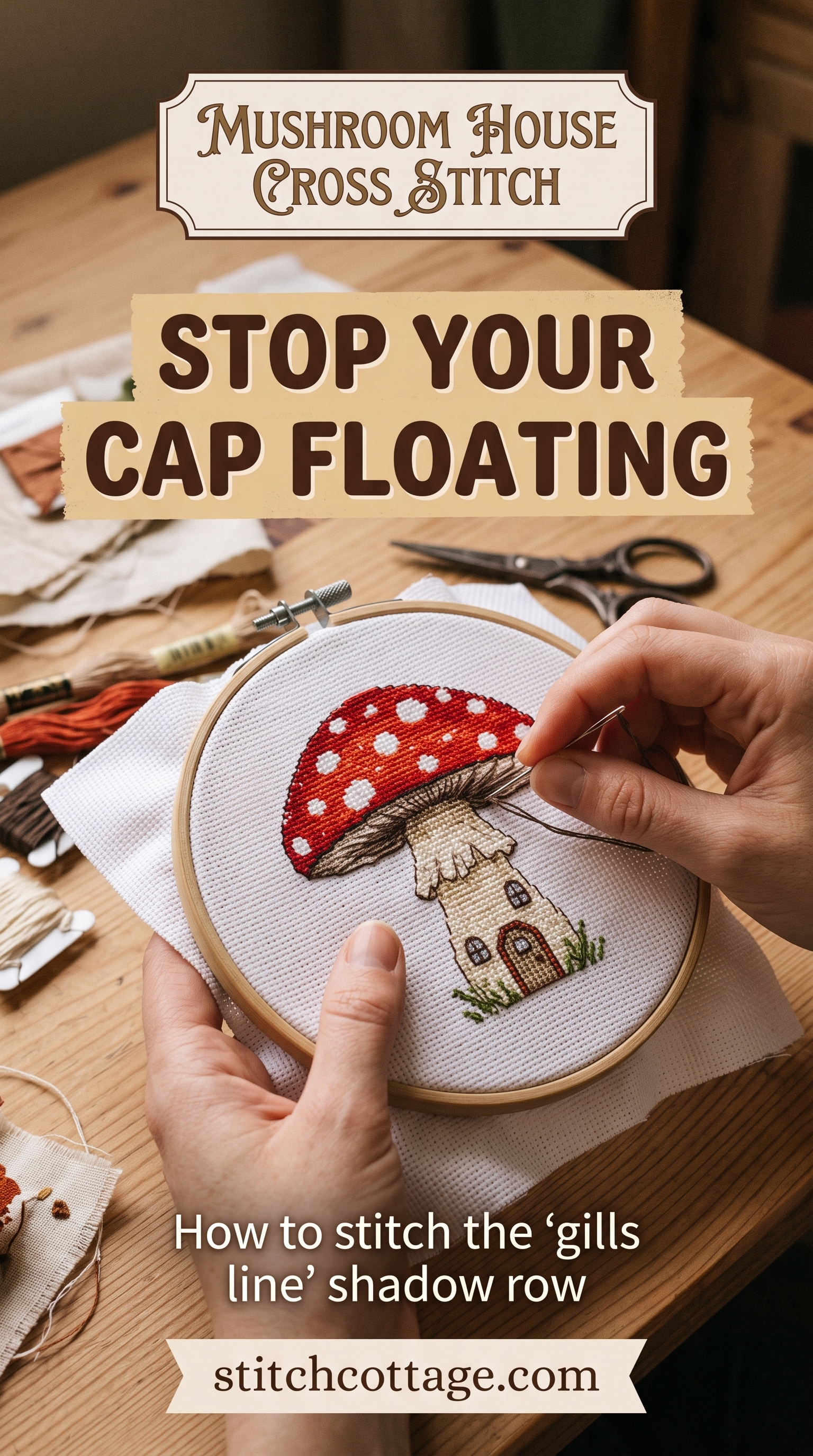
- The gills line. One row of a darker shade where cap meets stem. Leave it out and your cap floats.
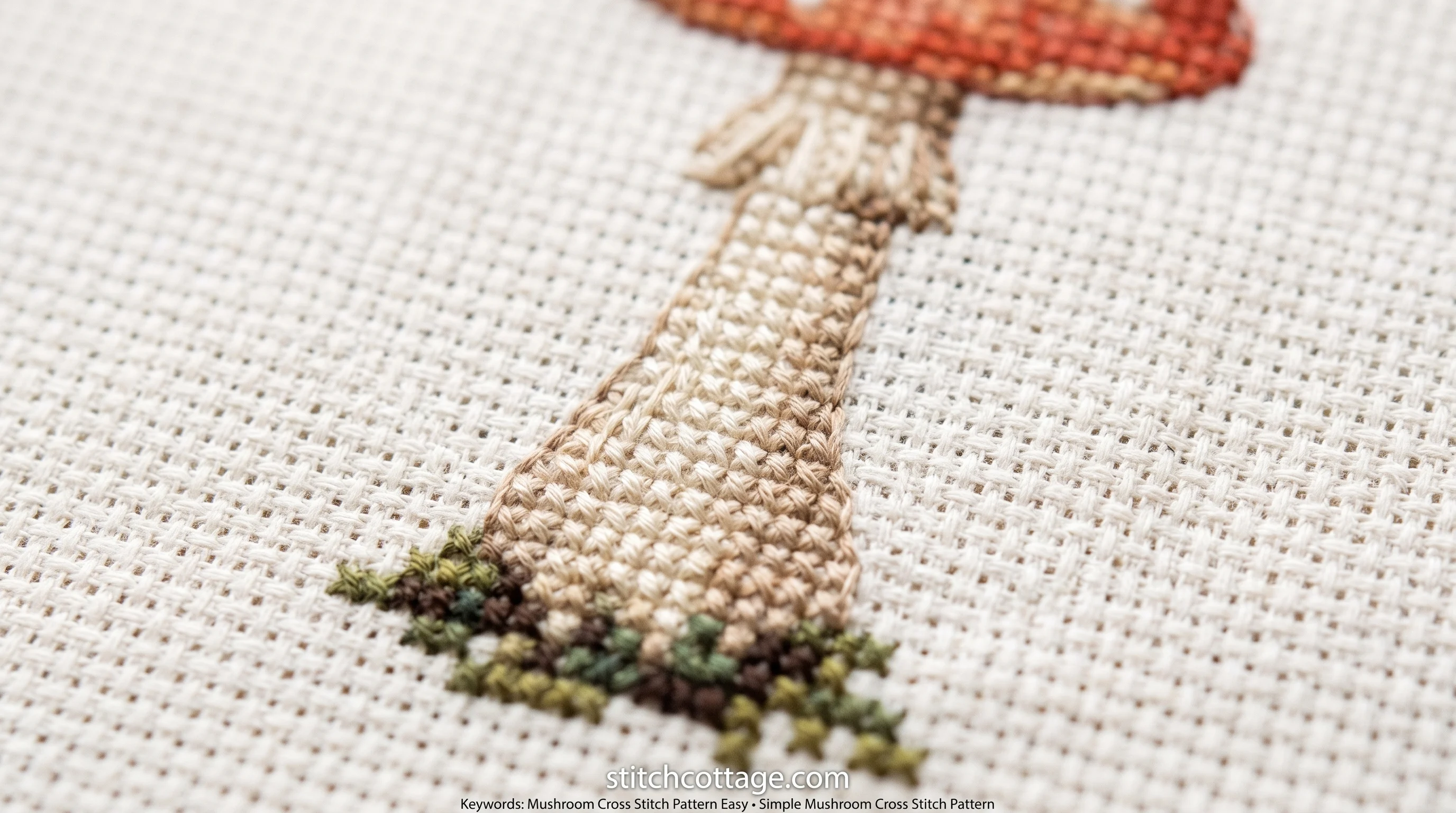
- Stem taper. Two squares wider at the base than at the top. A straight stem looks printed, not grown.
Spots are decoration and go on last. Stitch them in full crosses on an odd count, never an even one.
My own toadstools got better the day I stopped counting spots in pairs.
Five on the near side of the cap, three behind, nothing in the middle. Symmetrical spots are what make a toadstool look like a bath toy. Any chart that shows you its spot placement in the preview has already done this thinking for you.
The cap ratio does all the work. Everything after it is colour choice, and colour choice is where free charts get expensive.

Why free mushroom charts fail you
Mushroom charts are everywhere and almost none of them is checked. One large pattern catalogue holds 36 mushroom cross stitch charts. Not a single one of them carries a review.
The most saved of them has 41 saves. So there is appetite for the motif and no verdict on any single chart.
The checking falls to you, at your fabric’s expense. My rule is simple: no stated count, no needle.
Four faults come up again and again in what stitchers report back:
| What goes wrong | How it shows up on your fabric |
|---|---|
| Stitch count missing or wrong | You start from the centre, then run off the edge of your aida two thirds of the way up |
| The PDF page is cropped | A column of the design is simply blank, and you find out at the final row |
| Symbols that only differ by colour | Print it in black and white and two shades become one symbol |
| A floss number no longer made | You are guessing a substitute shade halfway through the cap |
| Colour count unstated | A chart sold as easy turns out to carry 150 shades |
None of that is about your counting. It is about the chart, and all of it is visible in a minute before you thread a needle. A catalogue that prints the count, the colour list and the licence on every file removes the question instead of answering it.


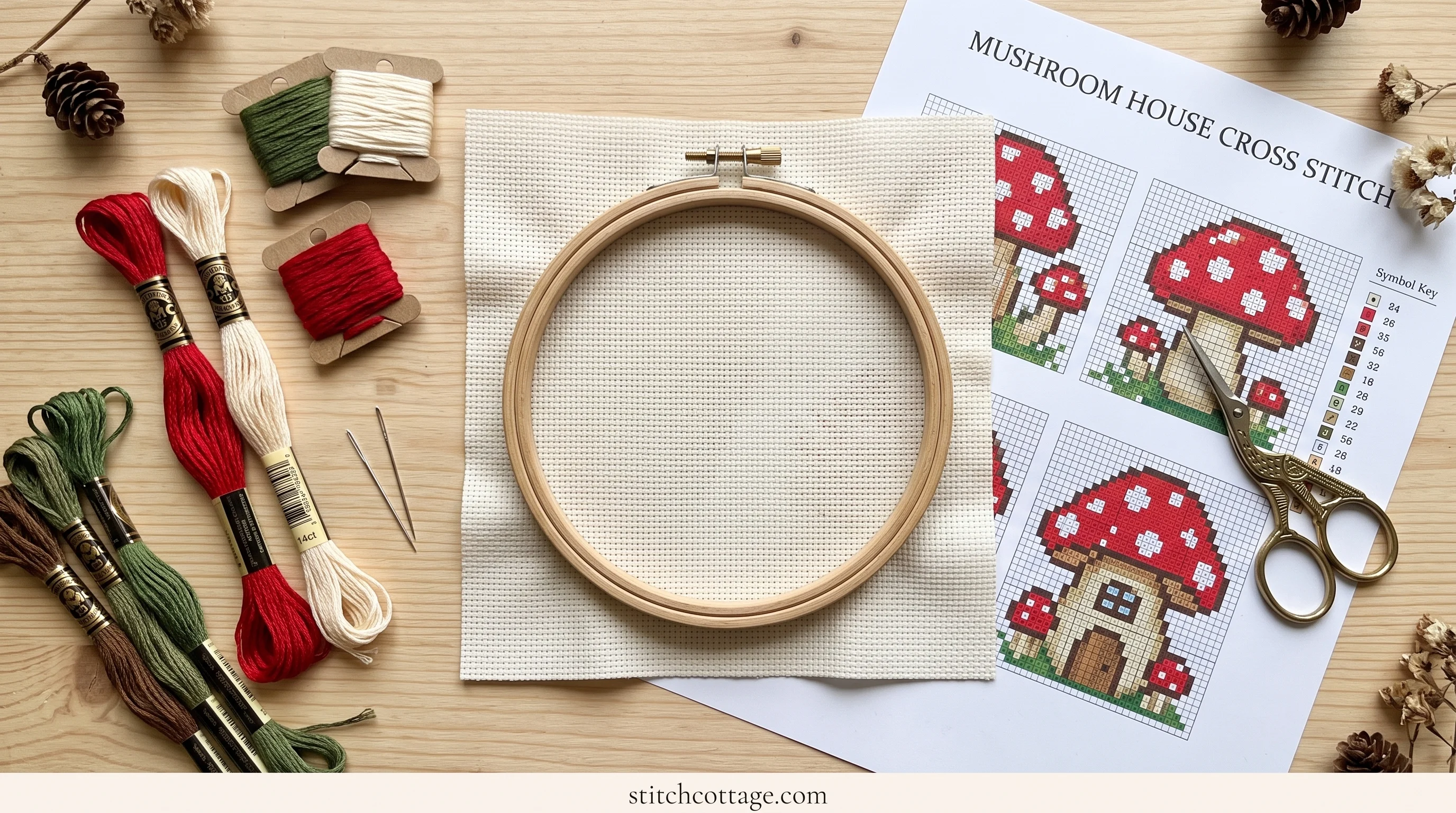
What you need: aida, two strands, three colours
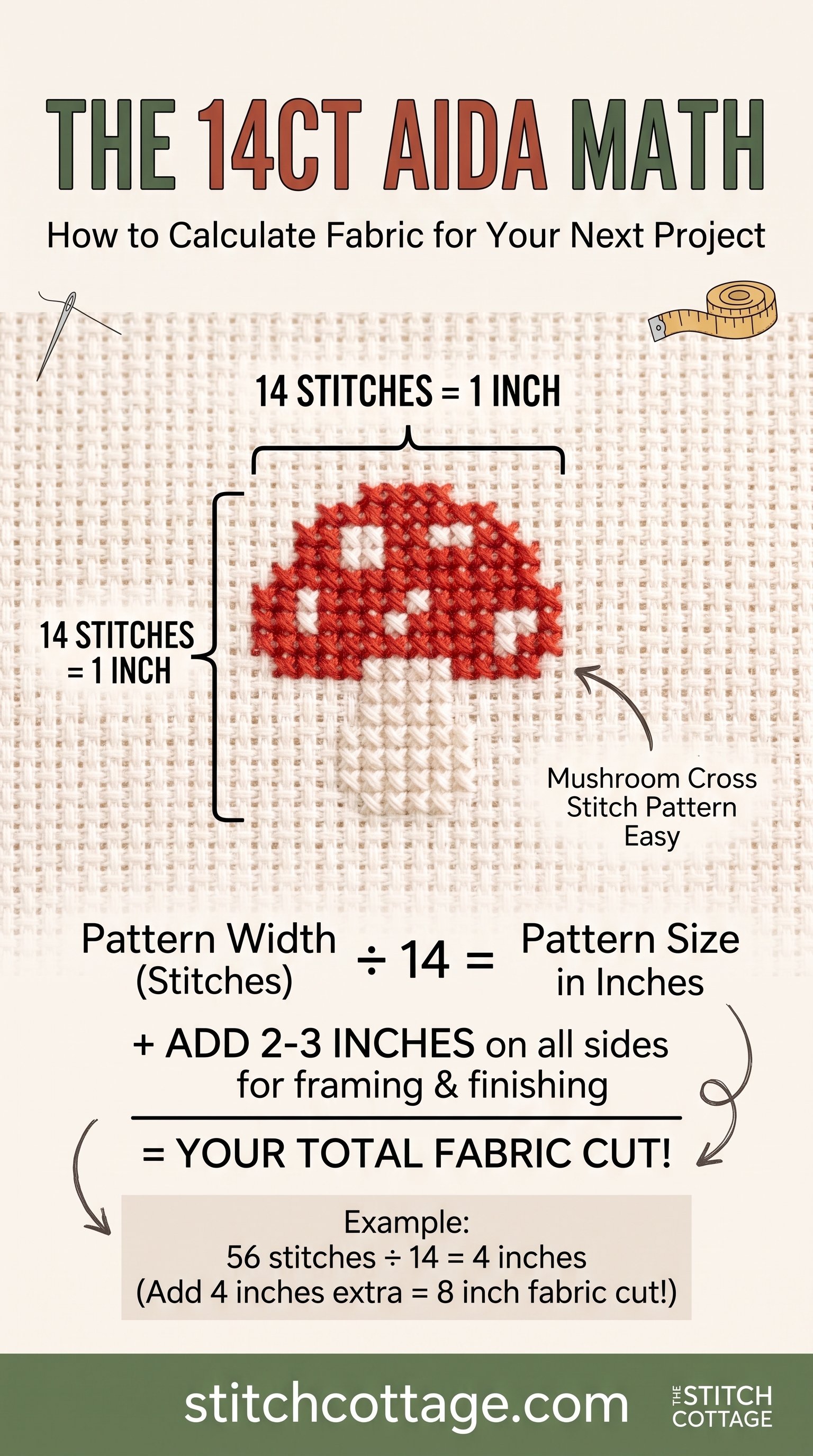
- 14 ct aida. The count every number on this page assumes. Divide your stitch count by 14 for your finished size in inches.
- Two strands of floss for full crosses on 14 ct. One strand leaves the fabric showing through your cap.
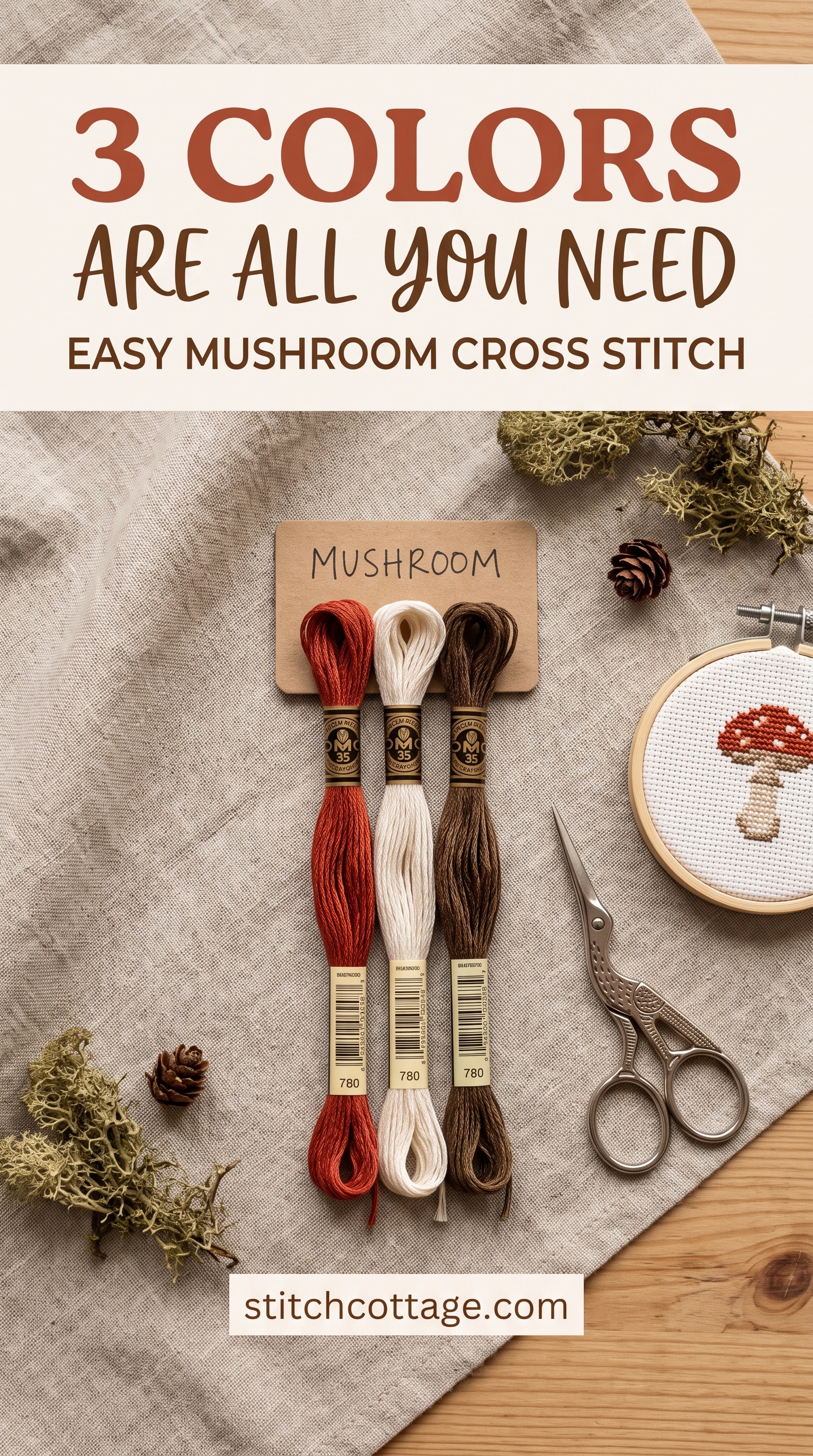
- Three colours minimum: cap, stem, gills shadow. Five if you want spots and a stray leaf.
- A hoop you can hold in one hand. A motif this size never needs a frame.
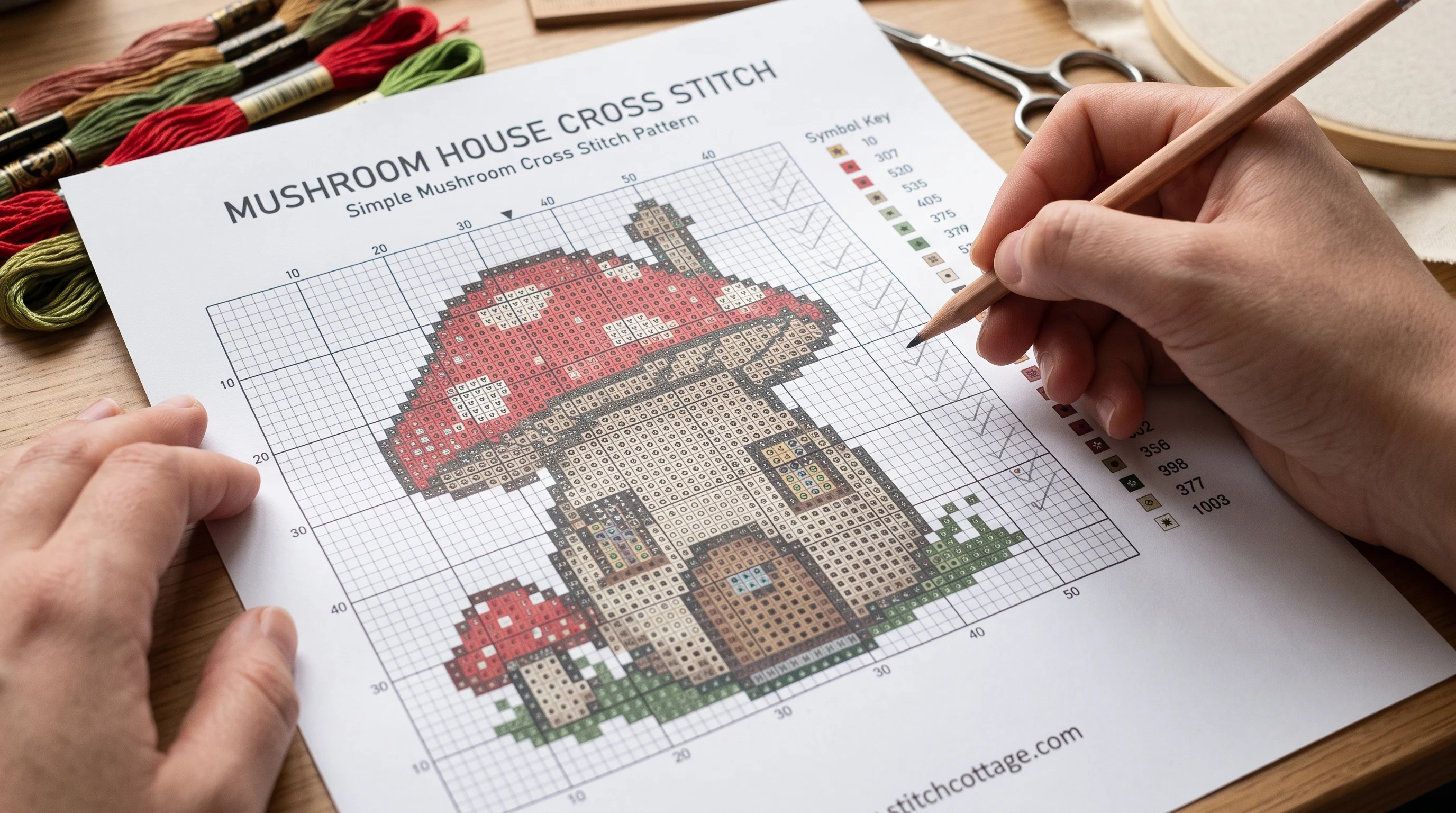
- The chart on paper, not on a screen. You will mark off rows, and marking off rows is what stops your count drifting.
Start every one of these from the centre of your fabric and the centre of the chart. Count the first row twice.
A miscount on row three shows up on row forty, and by then your evening is reverse stitching rather than stitching. A chart with its centre marked on the grid saves you that evening.


1. The red-cap toadstool, the one everybody means
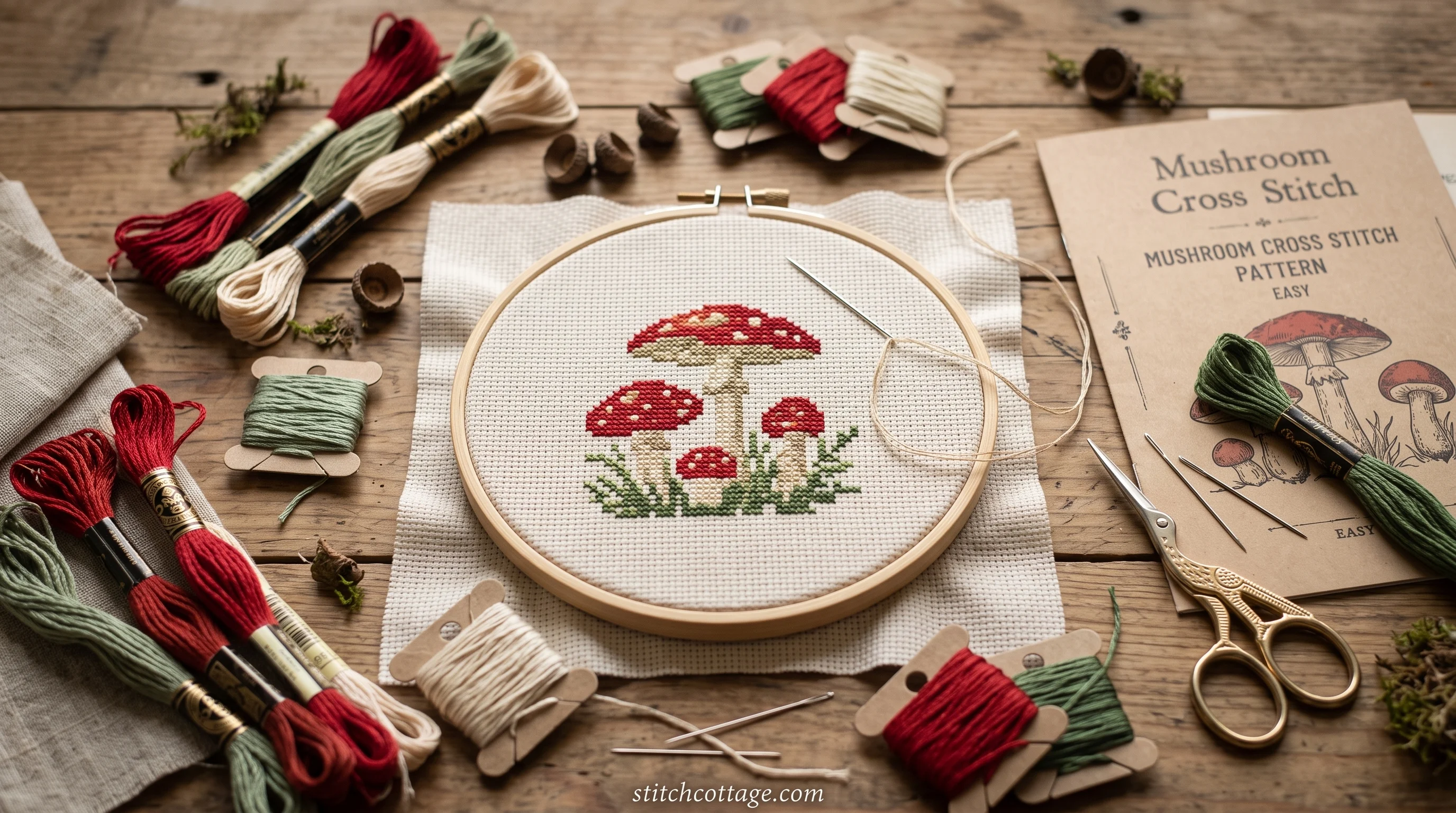
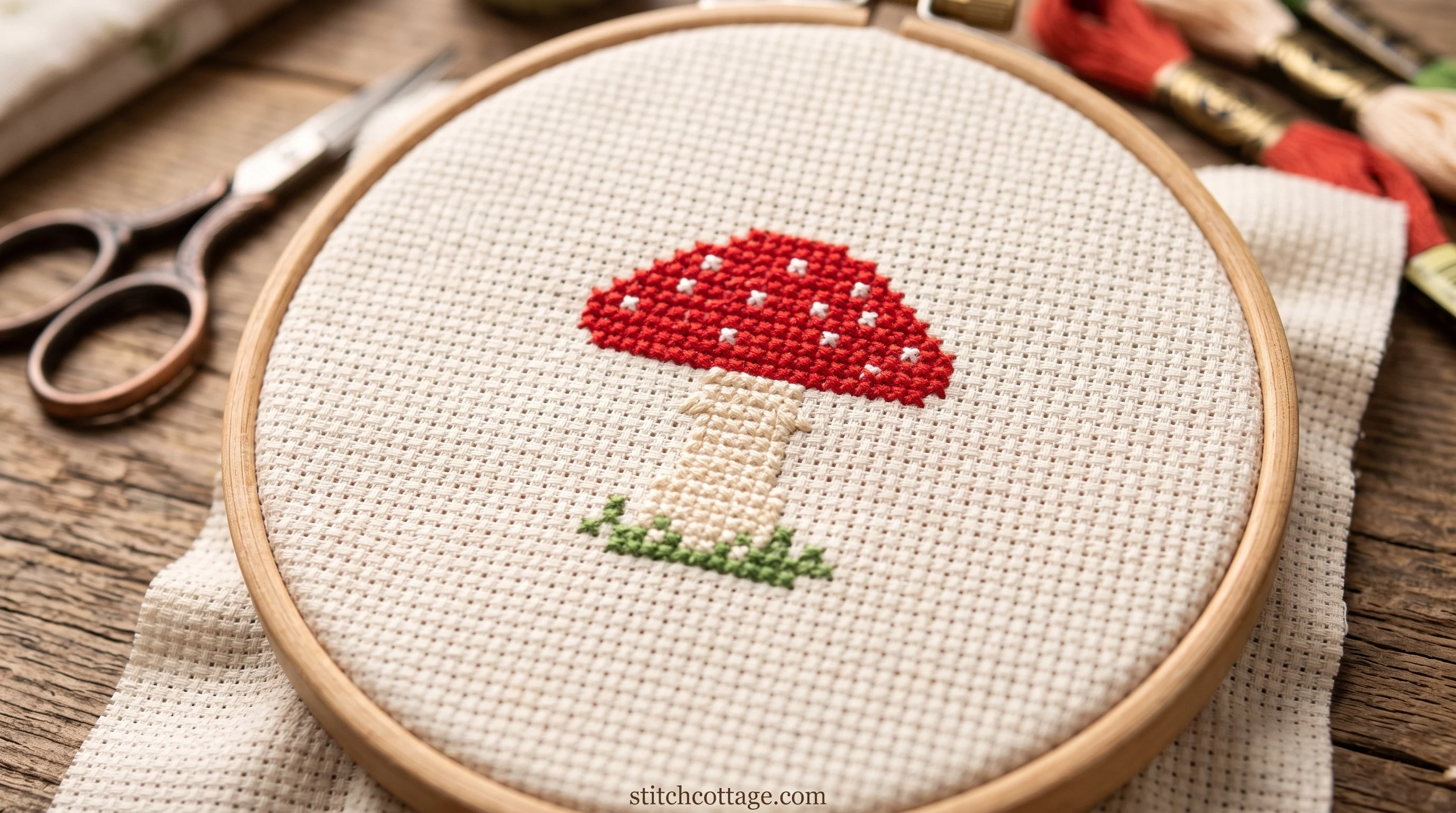
This is mushroom cross stitch in its default form. Flat scarlet cap, cream stem, white spots, a slip of green at the base.
Build it in this order. Gills line first, straight across, so your cap and stem can never drift apart. Cap next, working outward from that line in both directions, which keeps it even without counting from an edge. Stem under it with its two-square taper. Spots last.
Keep it around 68 stitches wide and it finishes just under 5 inches on 14 ct. That sits inside a small hoop with a margin for my fingers to grip.
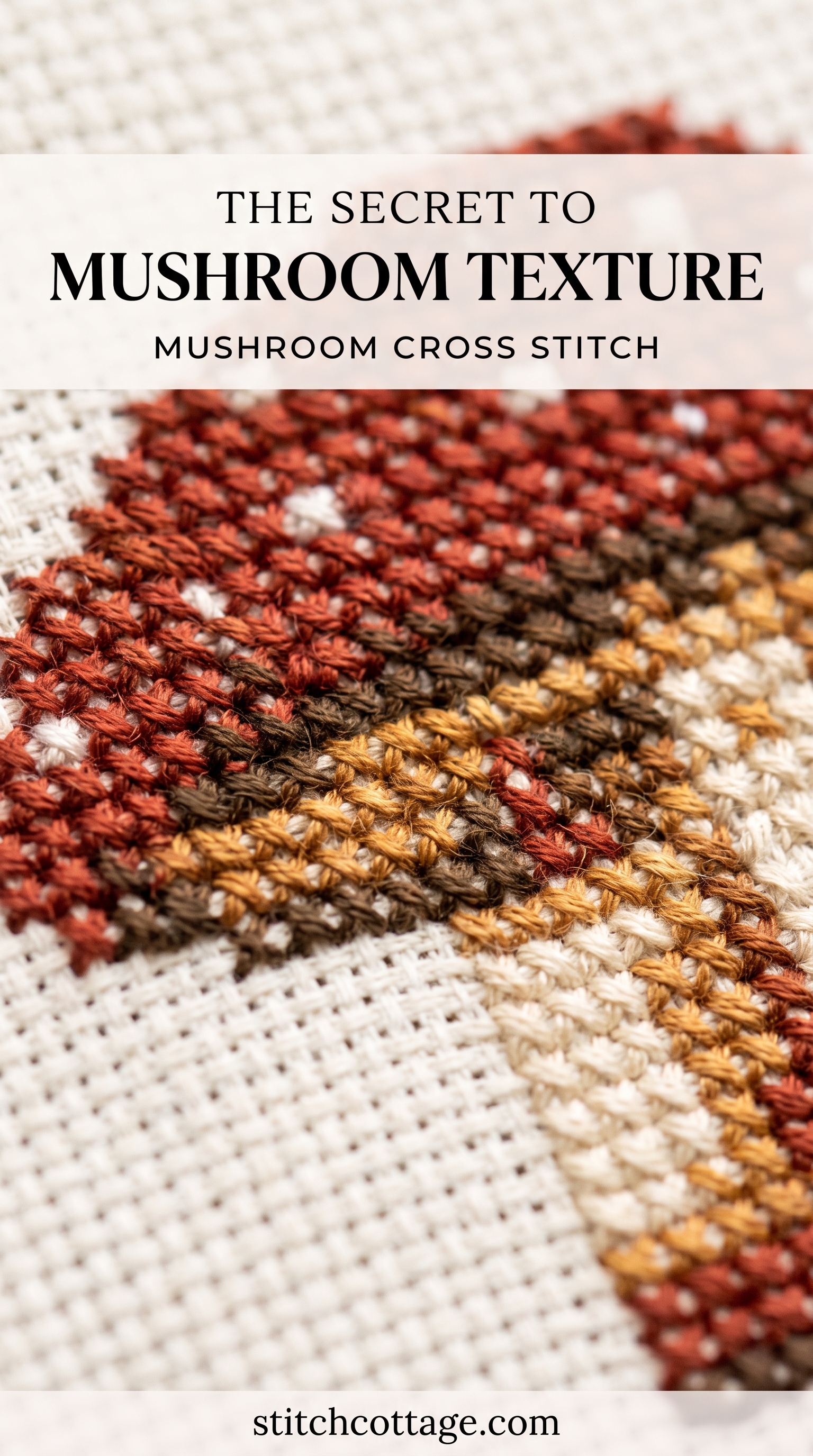
You want four colours here: scarlet, a deeper red for the cap shadow, cream, and one green. The deeper red is the colour people skip, and it is the one that turns a flat red blob into a cap with a curve. Most red toadstool charts worth stitching name that second red in the key.
2. Mushroom cross stitch pattern easy: the beginner version
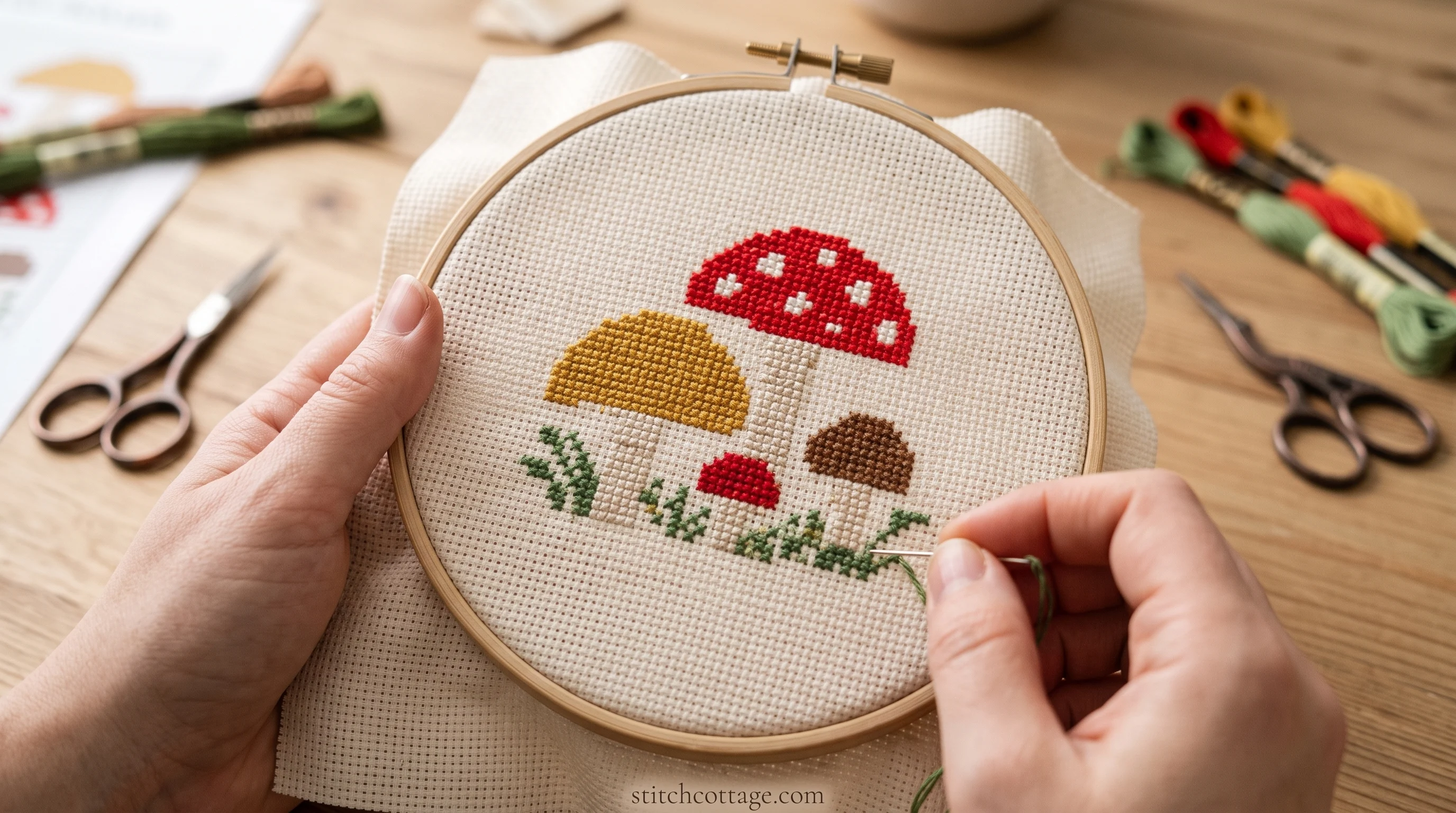
Easy here means a specific thing and not a vibe. Three colours, full crosses only, no fractional stitches, no backstitch outline, and no block of solid colour smaller than two squares.
Half stitches and single-square dots are what make a small chart feel hard. Drop your spots to three squares each, drop the gills shadow to one straight row, and lose the outline altogether.
The motif gets bolder rather than cruder, and you finish it in an evening. That is the version I hand to anyone who asks me where to start.
This is also the version to stitch first when you are judging a designer. If the easy chart has a clean symbol key and an honest stitch count, the complicated one usually will too.


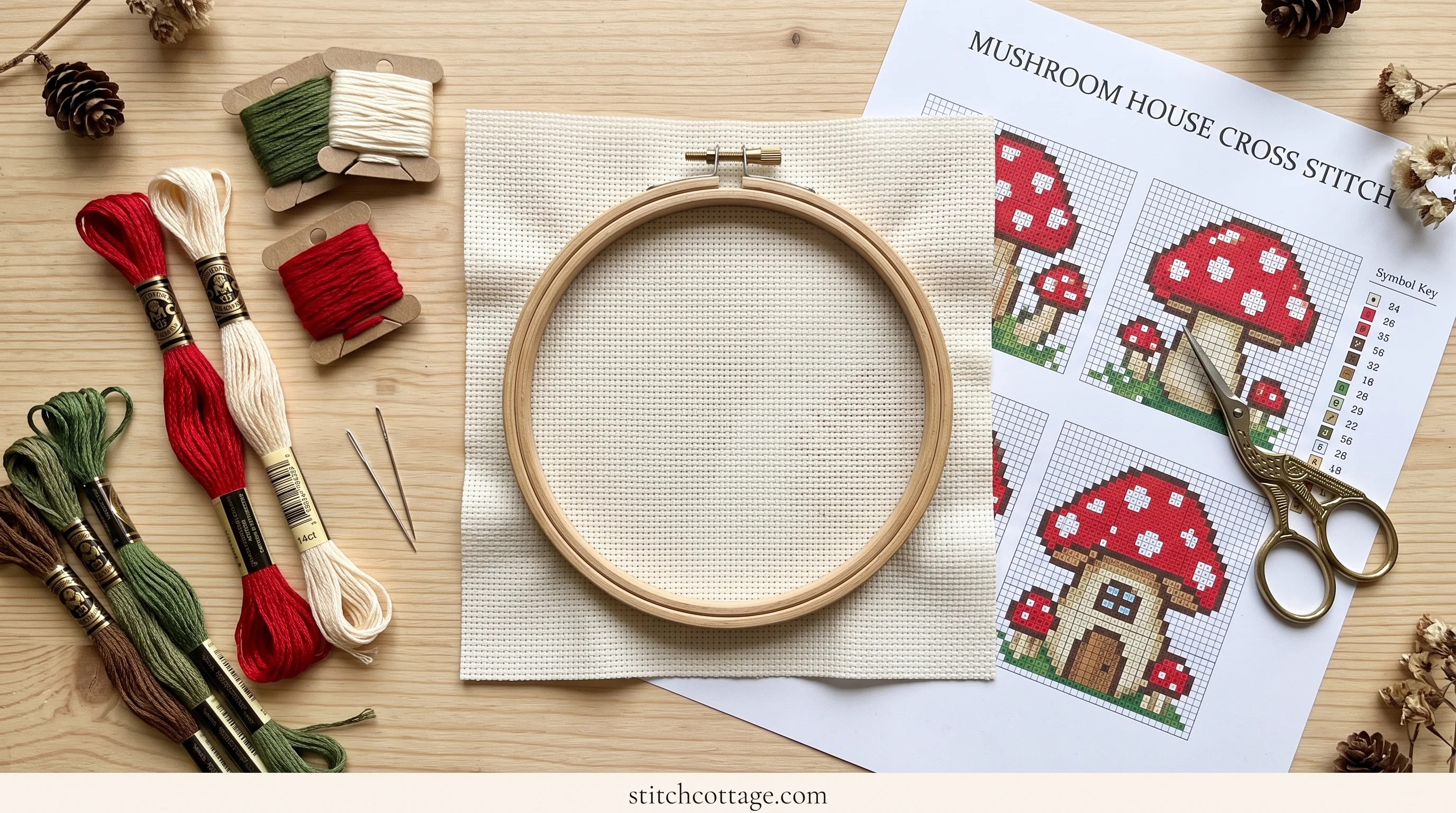
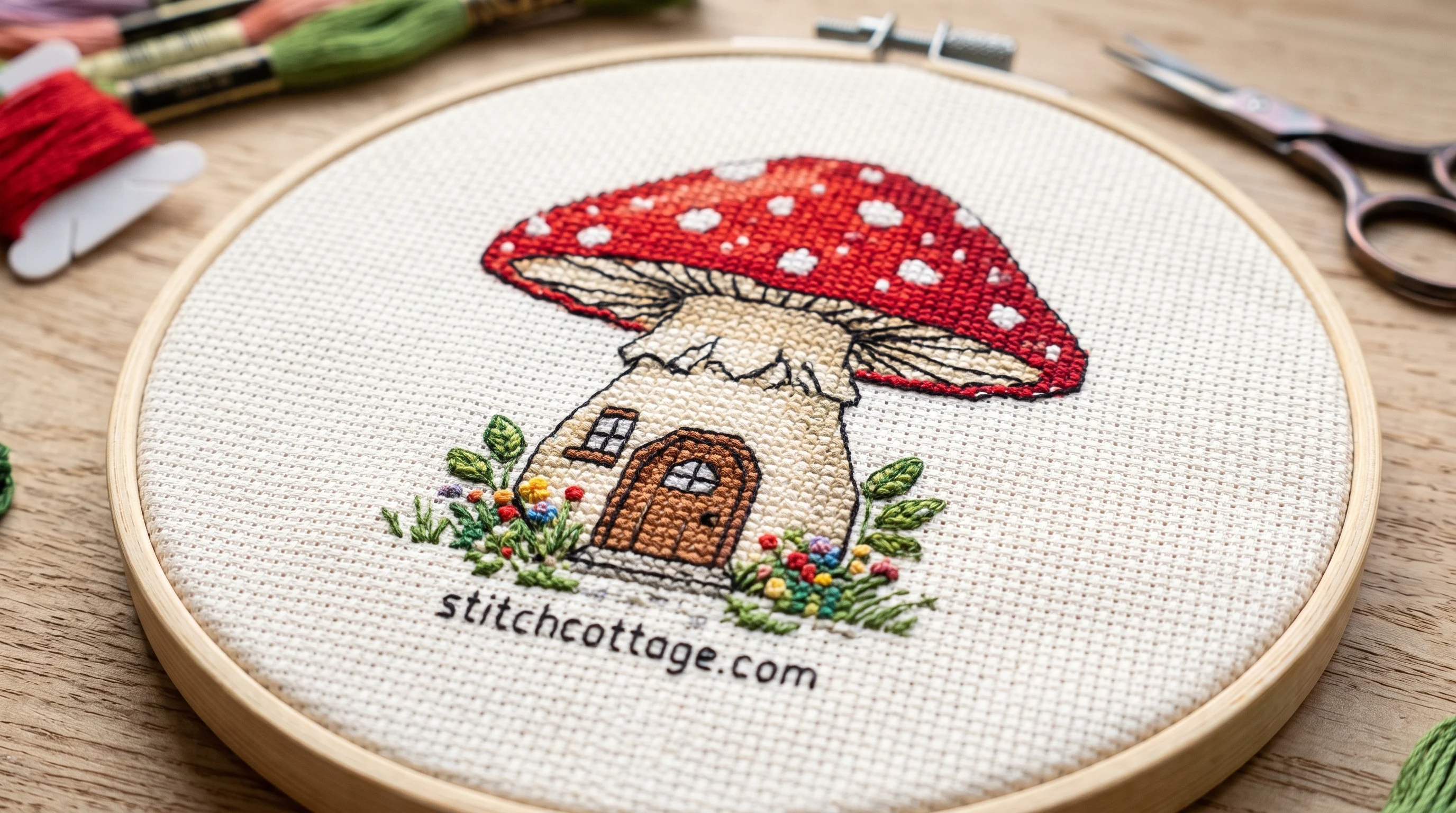
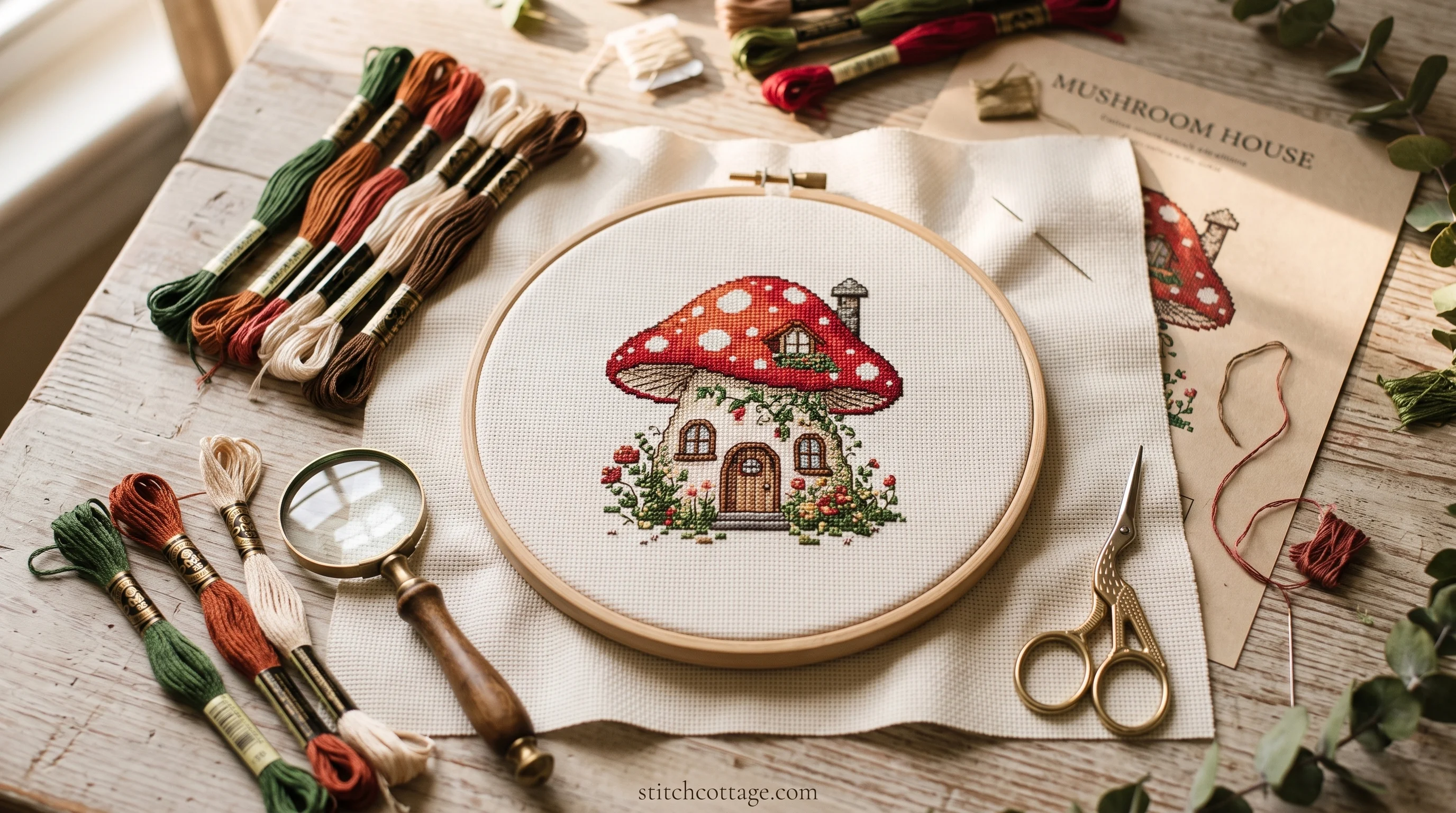
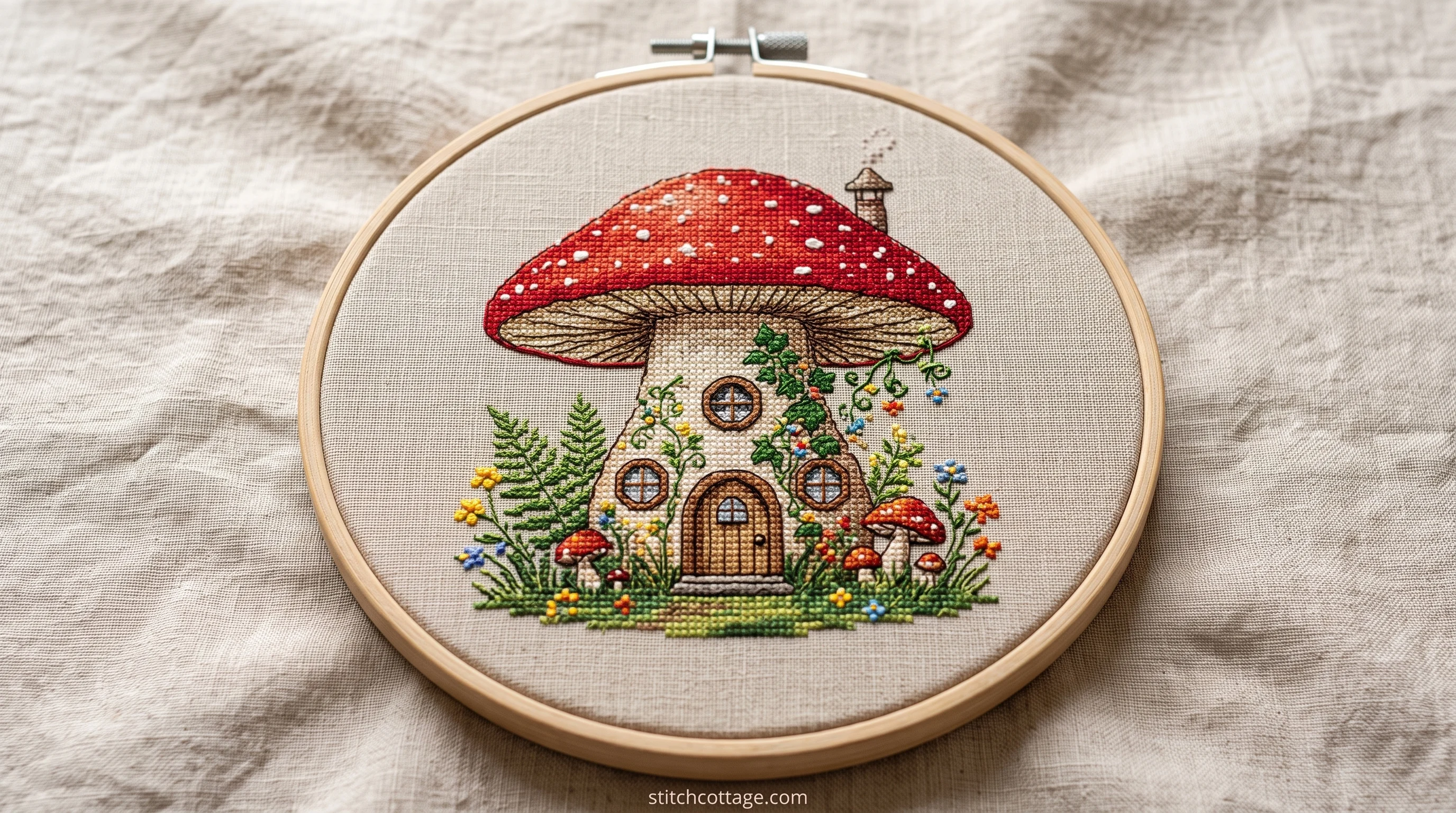
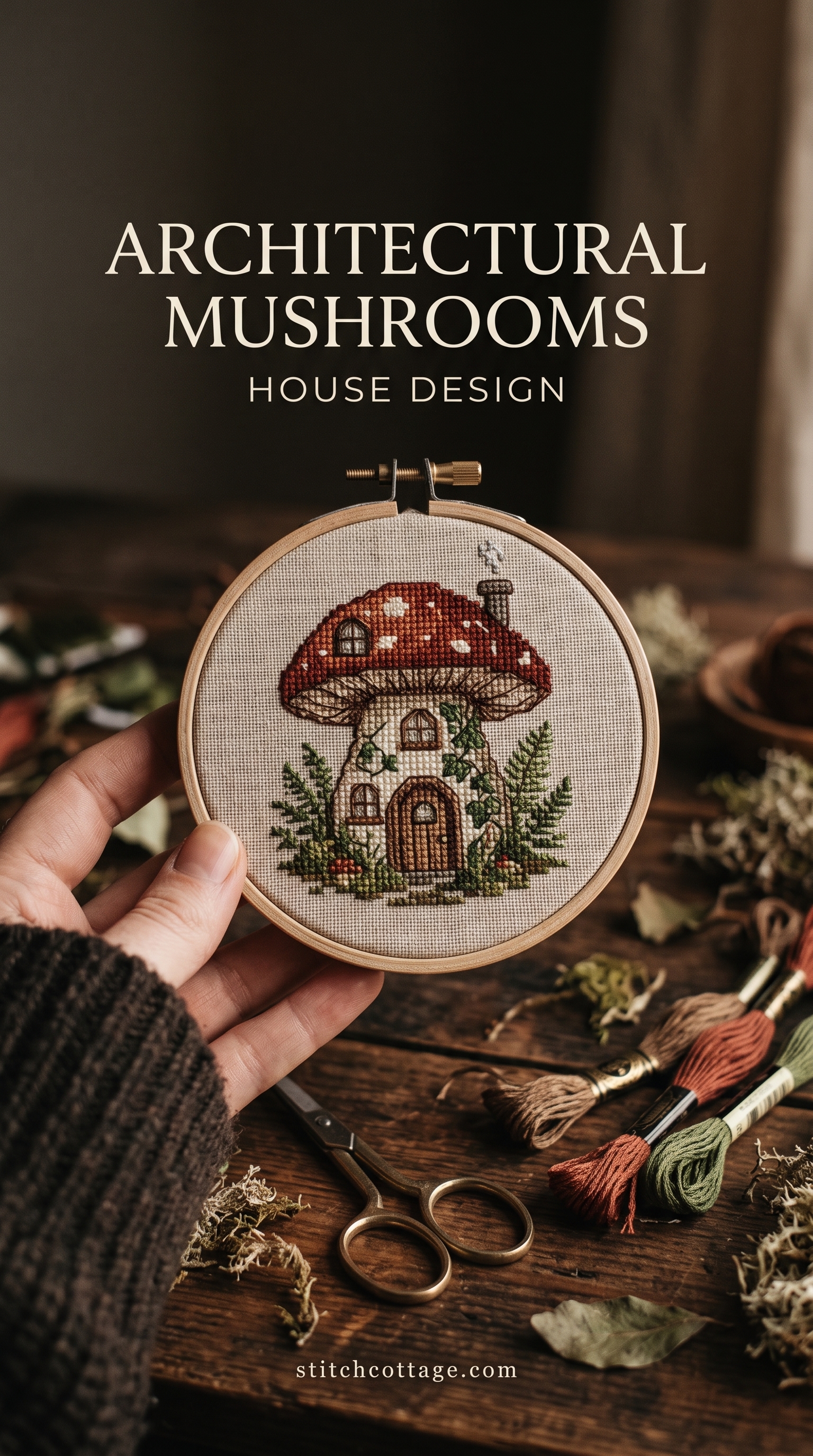
3. Mushroom house cross stitch: the cottage under the cap
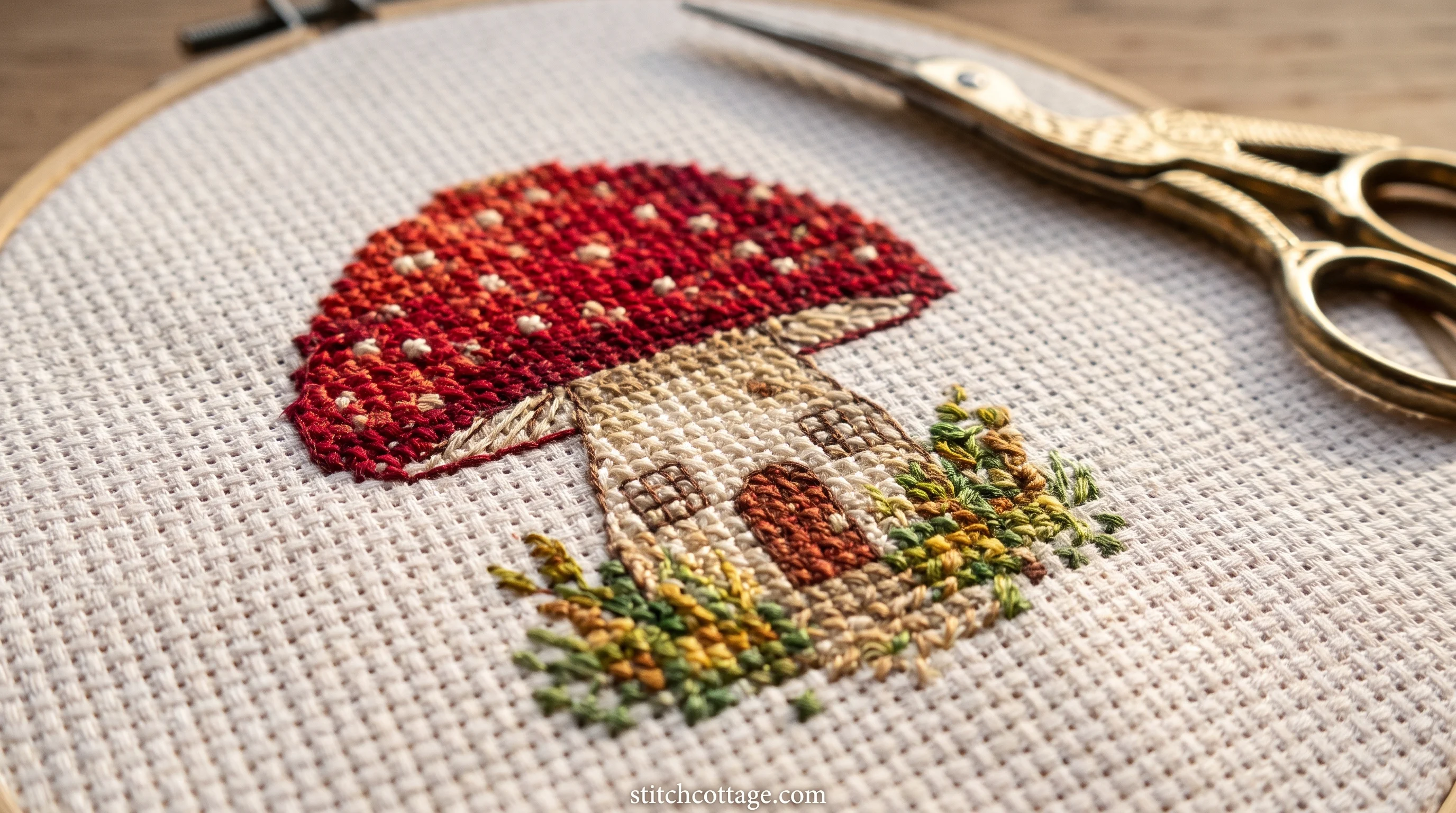
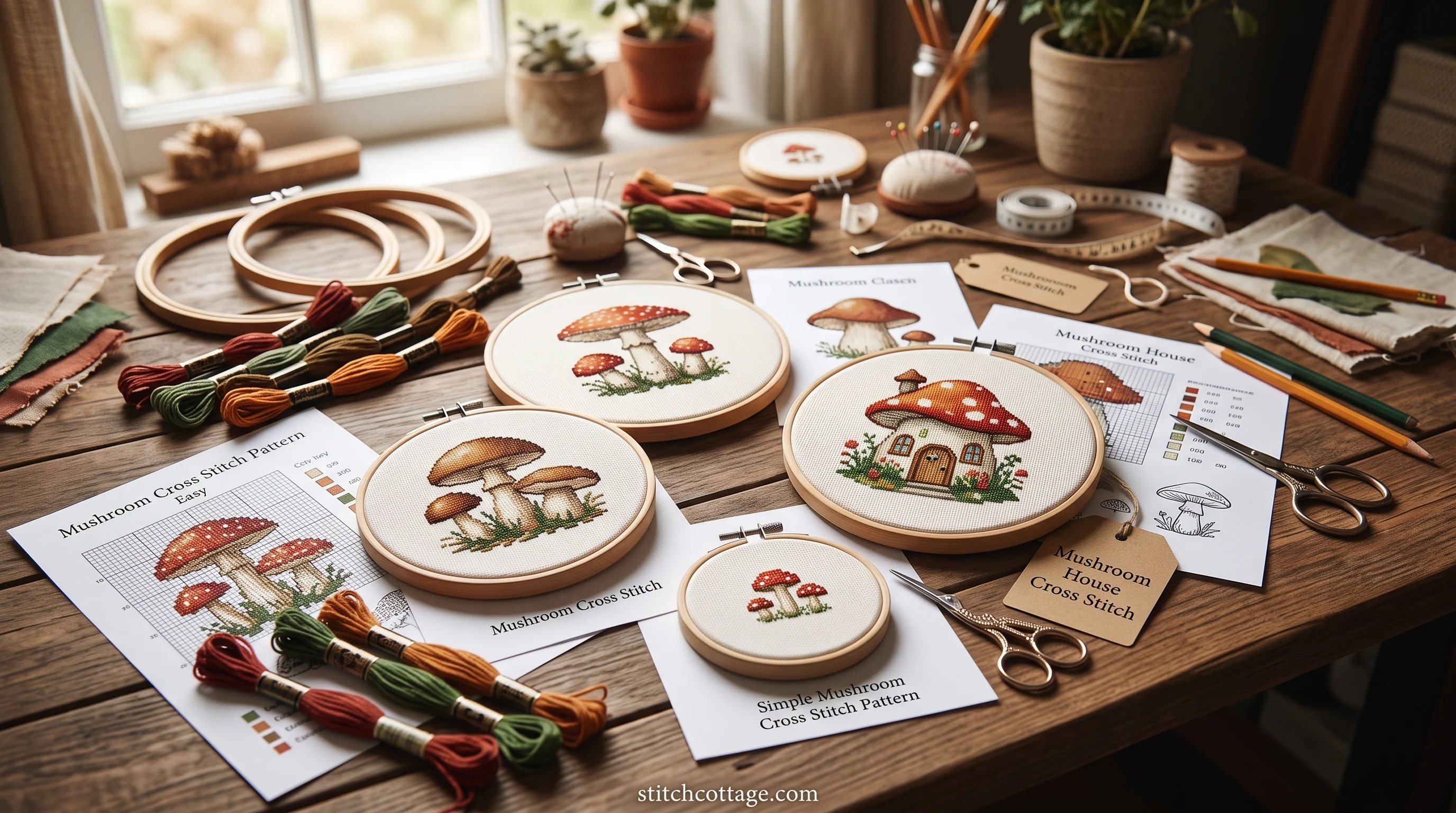
Here the cap becomes a roof, so your proportions change. The stem widens to hold a door, and the cap overhangs it on both sides. That overhang is the whole illusion: shorten it and you have a tower in a hat.
Door and windows are the only places this motif needs a backstitch outline. Stitch the house wall in one light shade and the openings in your darkest, then let the outline do the frames. A window with no outline reads as a hole on 14 ct.
Mushroom houses want more width than a plain toadstool, closer to 8 inches finished, because there is a path or a fence or a second small cap beside the door. Plan your fabric for that before you cut, or buy a mushroom house chart that states its finished size and cut once. Our cross stitch house patterns share this proportion rule.


4. Simple mushroom cross stitch pattern: the tiny motif
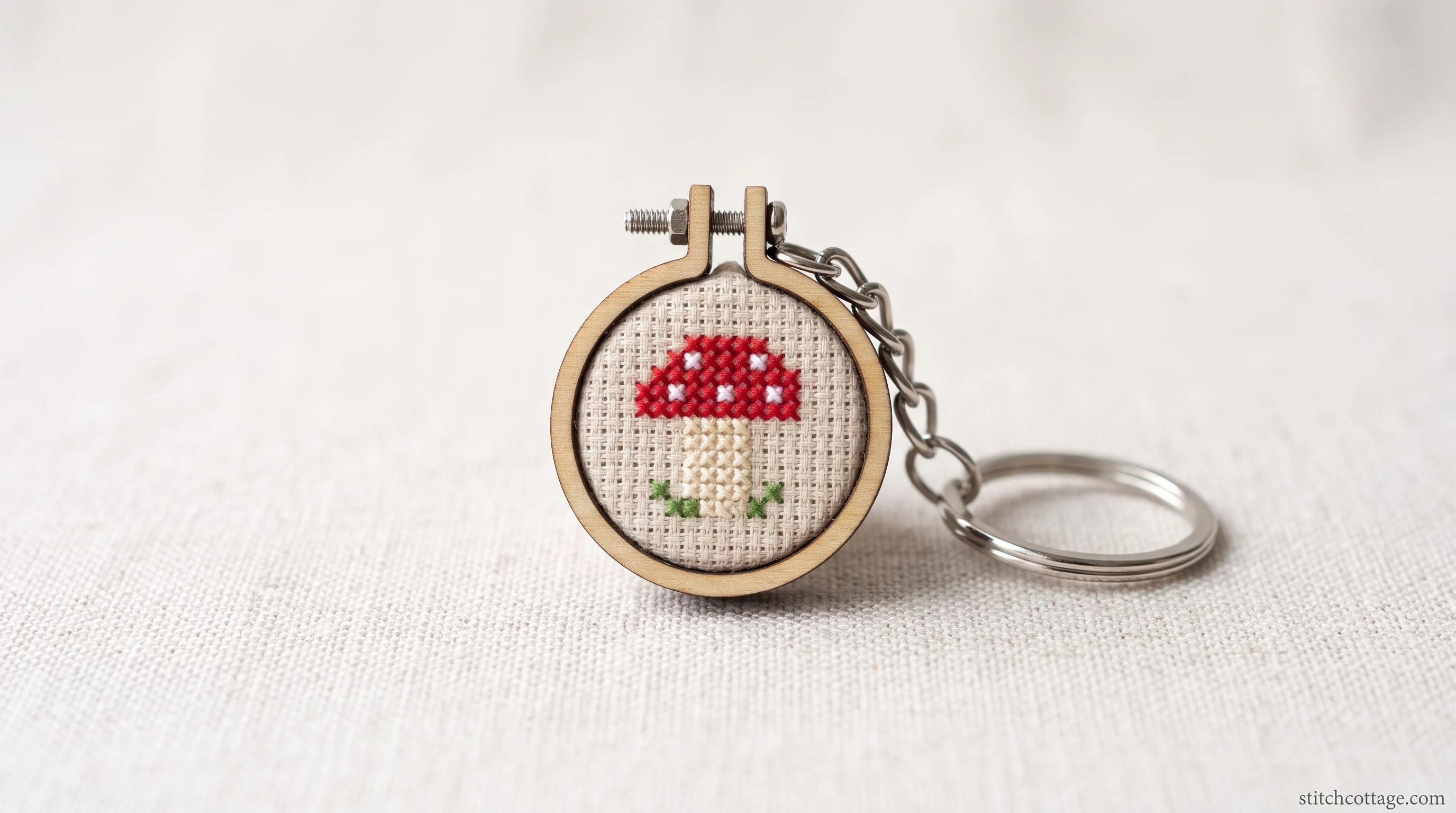
The smallest useful mushroom fits in a square of about 14 stitches by 14, which lands near one inch on 14 ct. Cap, stem, one shadow row, no spots. At that size a spot eats a quarter of your cap.
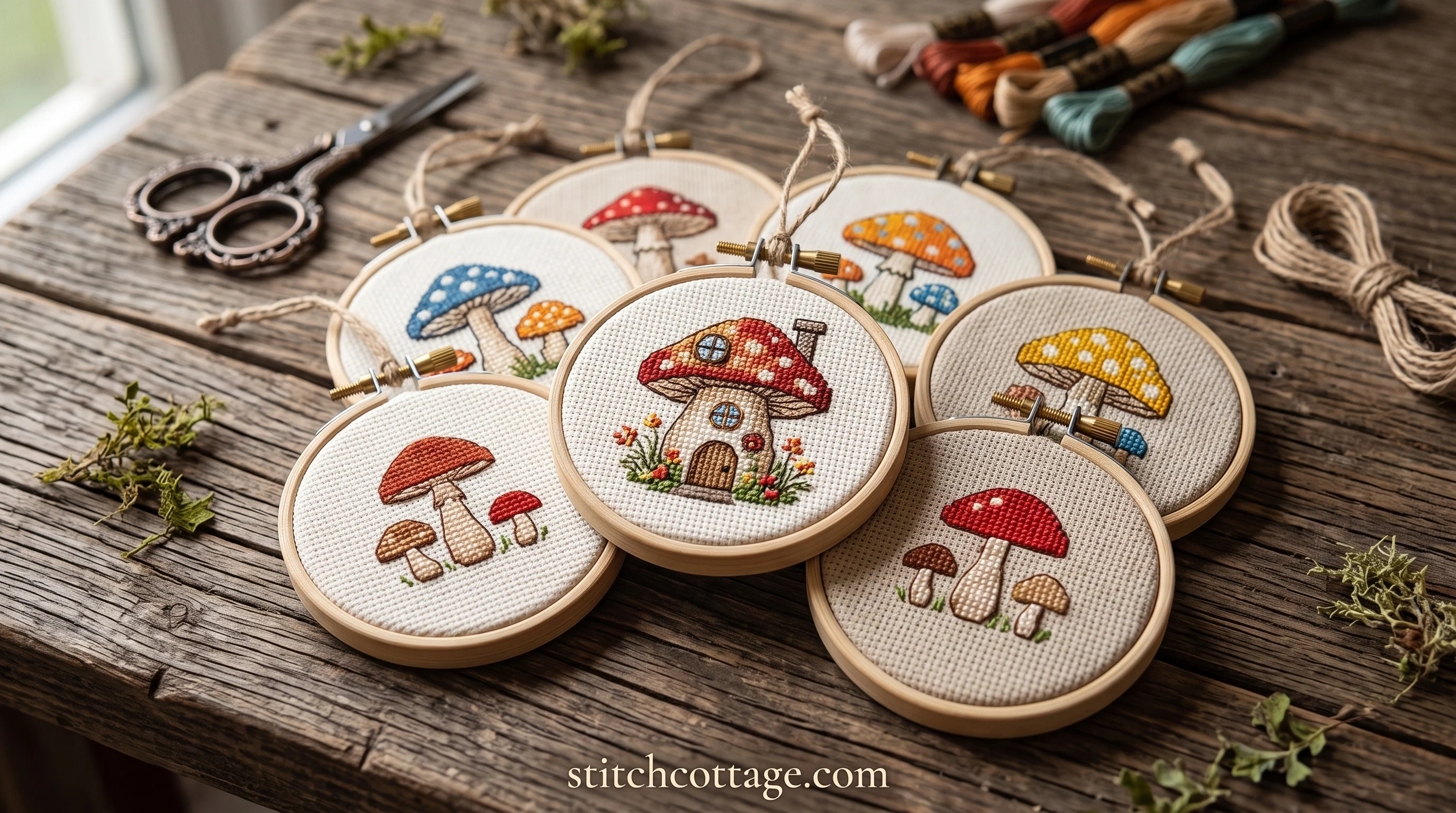
Tiny is where mushrooms earn their keep: a bookmark corner, a keychain, an ornament, the end of a hem band.
Three live on my sewing box lid, one evening between them.
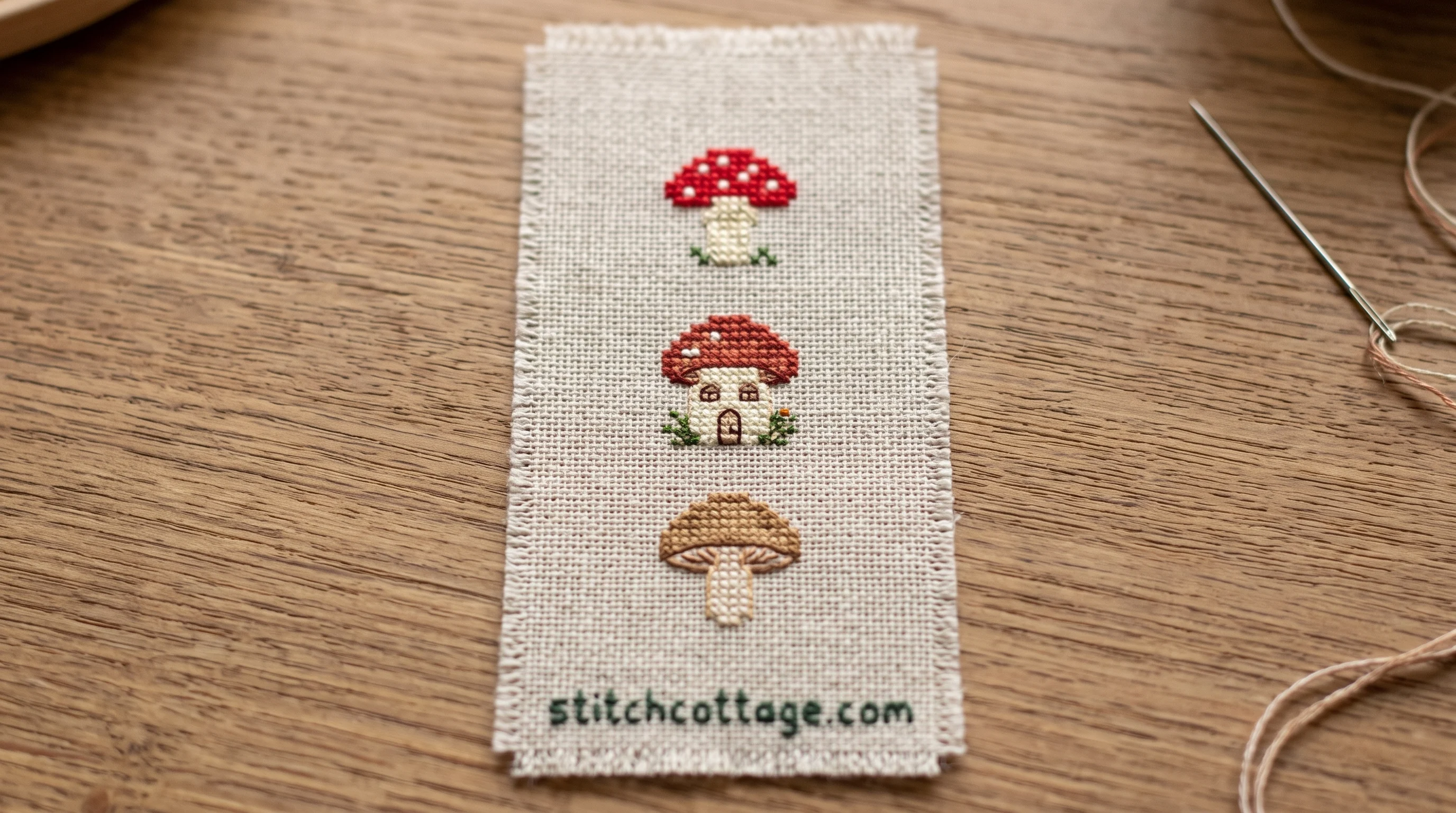
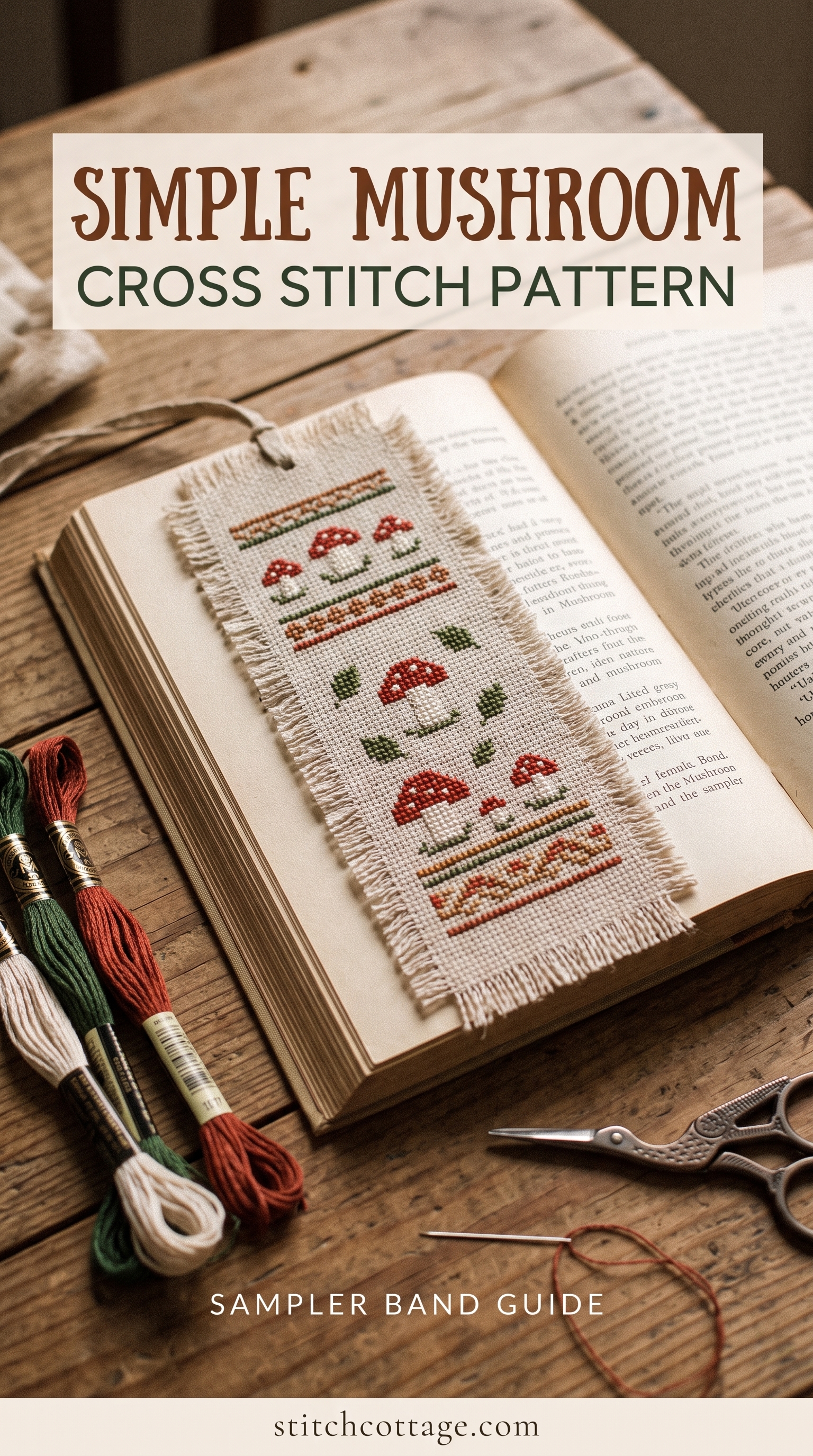
A motif this small stitches in under an hour. Three in a row make a sampler band with none of the usual planning.
Repeat the same tiny chart in three colourways rather than three different charts. The repetition is what makes a row of them look designed, and a tiny mushroom chart you may legally stitch for someone else is the one to repeat. Our hearts cross stitch patterns work the same way for a mixed-motif sampler band.

Check your chart before the first stitch
Every fault in the table above is catchable in about a minute, before your needle goes in.
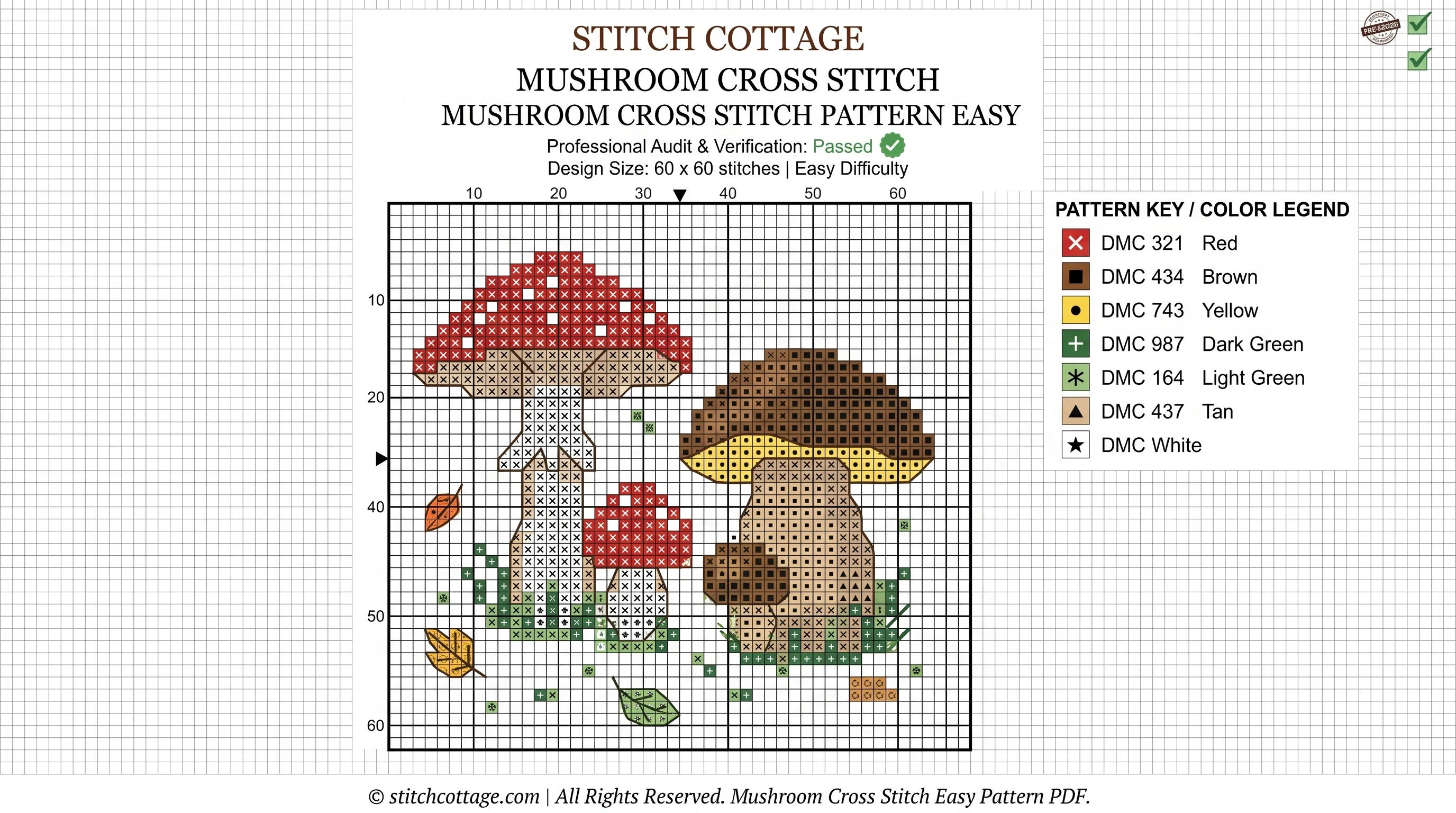
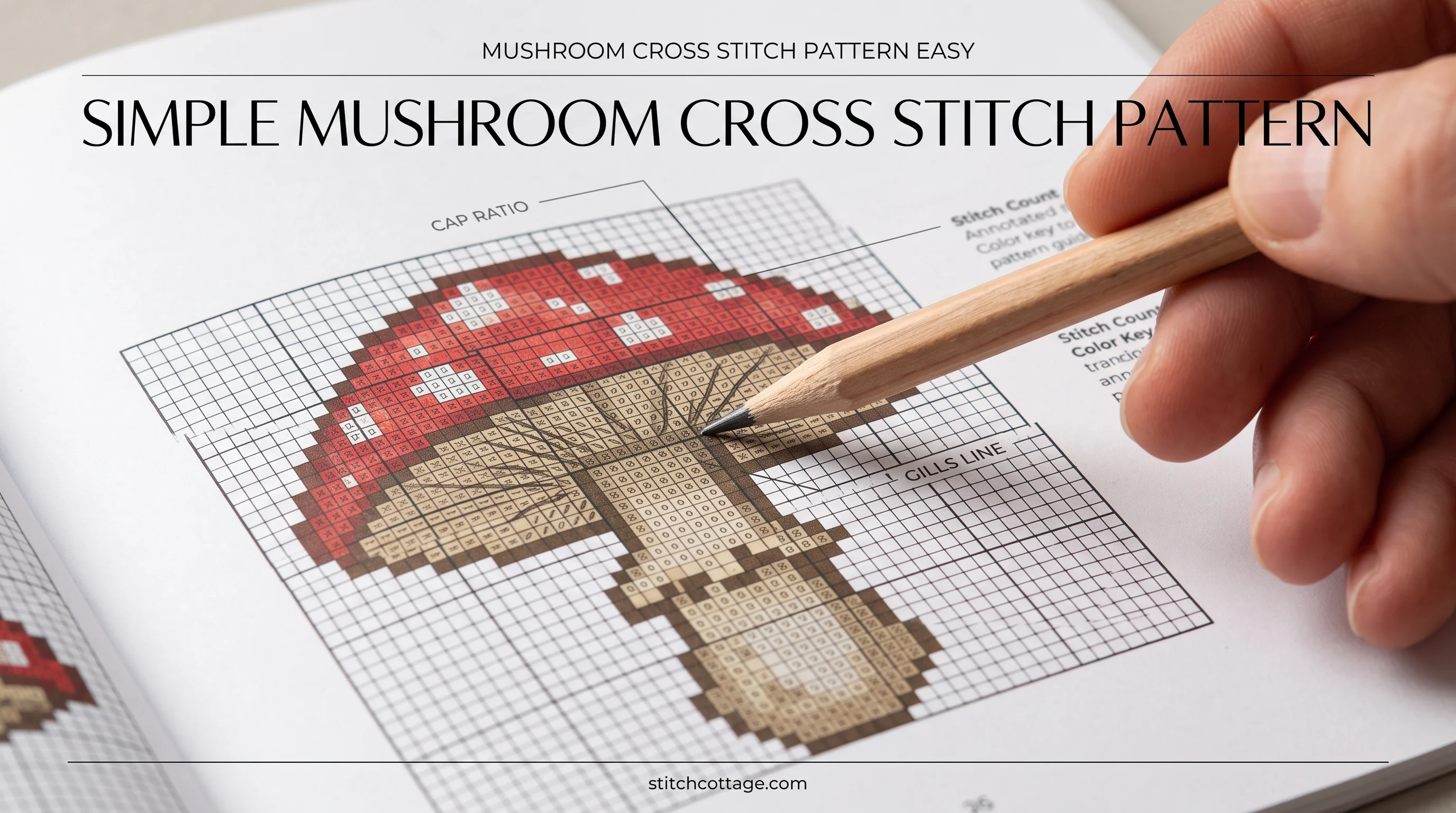
- Find the stitch count. Width and height, in stitches, stated by the designer. No count stated, no stitching: that chart is a picture.
- Divide by 14. That is your finished size in inches on 14 ct. Add two inches each way for your hoop.
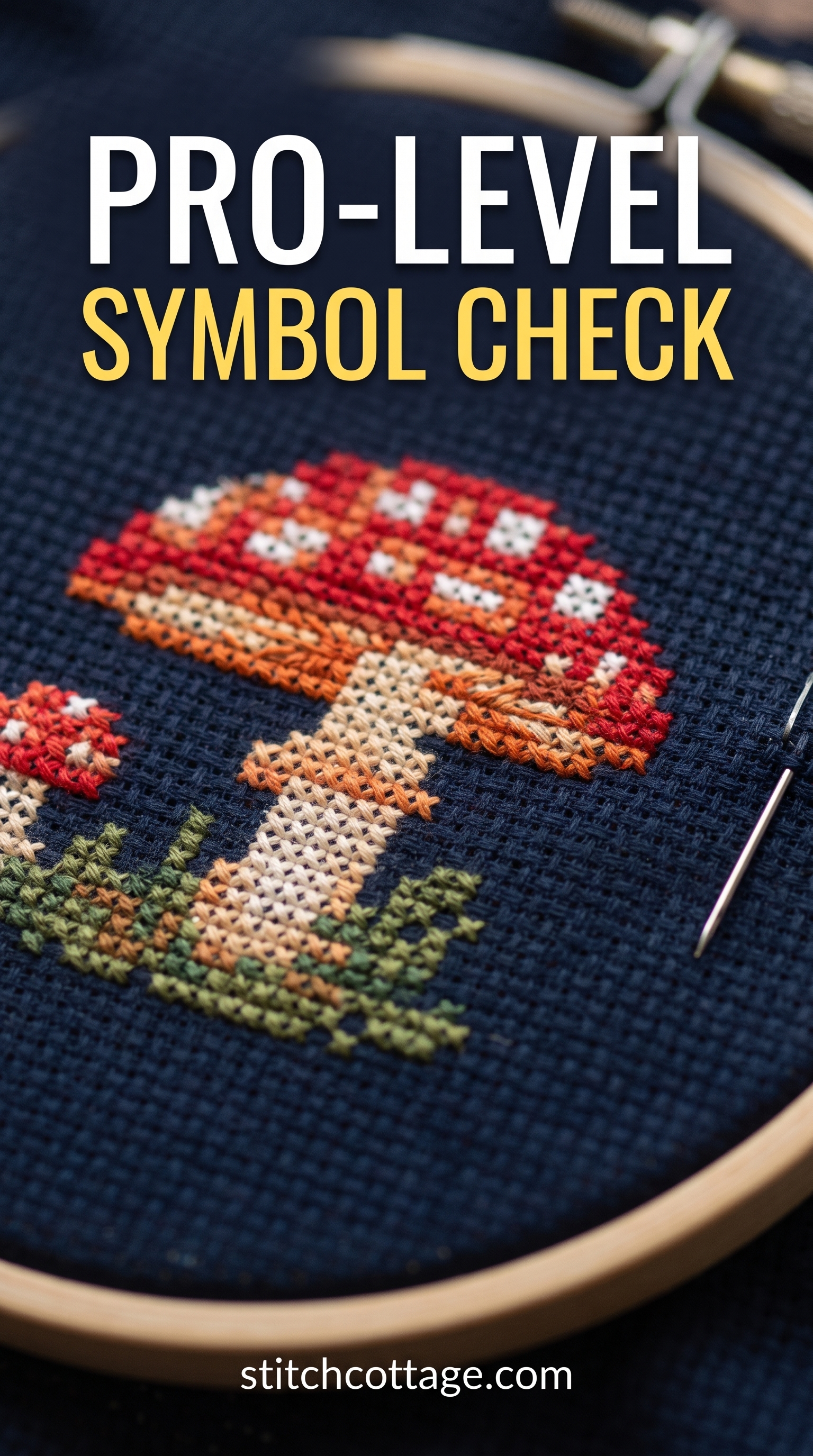
- Look at the symbol key in grey. Print one page without colour. If two symbols are now the same symbol, the chart is unusable however pretty the preview is.
- Check the page edges. Every page of the PDF should carry its own grid border. A missing border on one side is how a column of your design goes blank.
- Count the colours. A chart with 450 rows of grid and 150 shades is not a beginner chart, whatever the title says.
Free charts rarely pass more than two of those five. That is before the licence question: most of them say nothing about whether you may sell the finished piece, which matters the moment someone offers to buy the hoop off your wall. We run the same five-point check on our star cross stitch patterns and crescent moon cross stitch patterns.

Questions people ask about mushroom cross stitch
How to cross stitch a mushroom?
Stitch the gills row first, straight across where cap meets stem. Work the cap outward from that row, then the stem below it with a two-square taper, then the spots. Full crosses, two strands on 14 ct, starting from the centre of your fabric.
What size does a mushroom chart finish at?
Divide the stitch count by your fabric count. A chart 68 stitches wide on 14 ct finishes just under 5 inches; the same chart on 18 ct comes out smaller and on 11 ct larger. Add two inches of spare fabric on every side for your hoop.
How many colours does a mushroom need?
Three is enough: cap, stem, and one darker shade for the gills line. Four or five if you want spots, a shadow under the cap and a leaf. Anything advertised as easy and carrying dozens of shades is mislabelled.
Is a mushroom cross stitch good for a beginner?
Yes, as long as your chart is full crosses only. The shape forgives a stitch out of place in a way that lettering and faces do not, and the whole motif is blocks of solid colour.
What fabric count should I use?
14 ct aida for your first mushroom. The holes are easy to see, two strands fill a cross properly, and the arithmetic from chart to finished size is one division.
Why does my mushroom look like a lamp?
Your cap is too narrow for the stem’s height, or your gills row is missing. Widen the cap past the stem height and put one darker row where they meet. That is usually the entire fix.
Can I sell what I stitch from a free chart?
Not unless the chart says so. Most free mushroom charts are silent on it, and silence is not permission. A chart with a stated licence is the only safe one to stitch for someone else.
Key takeaways
- Cap wider than the stem is tall, cap depth half the width for a dome and a third for a flat toadstool. That ratio is the motif.
- One darker row where cap meets stem. Without it your cap floats off the stem.
- Your stitch count divided by 14 is the finished size in inches on 14 ct aida. No stated count means no chart.
- Three colours carry any mushroom; spots on an odd count, never symmetrical.
- Of 36 mushroom charts in one catalogue, none has a single review. Nobody has checked them for you.
- Print one page in grey before you start. Symbols that differ only by colour fail on paper.
- A mushroom house needs the cap to overhang the walls, and about 8 inches of width to hold a door.
- The tiny version, around 14 stitches square, is the one that becomes bookmarks, keychains and ornaments.
- When you would rather stitch than audit, start from charts that state count, colours and licence and keep your checking for the fabric.
